
Open to Whom?
Sir John Daniel on the promise of open learning, from a telephone kiosk to tens of millions of students.
Based on a conversation recorded over Zoom between Vancouver and Lyon.
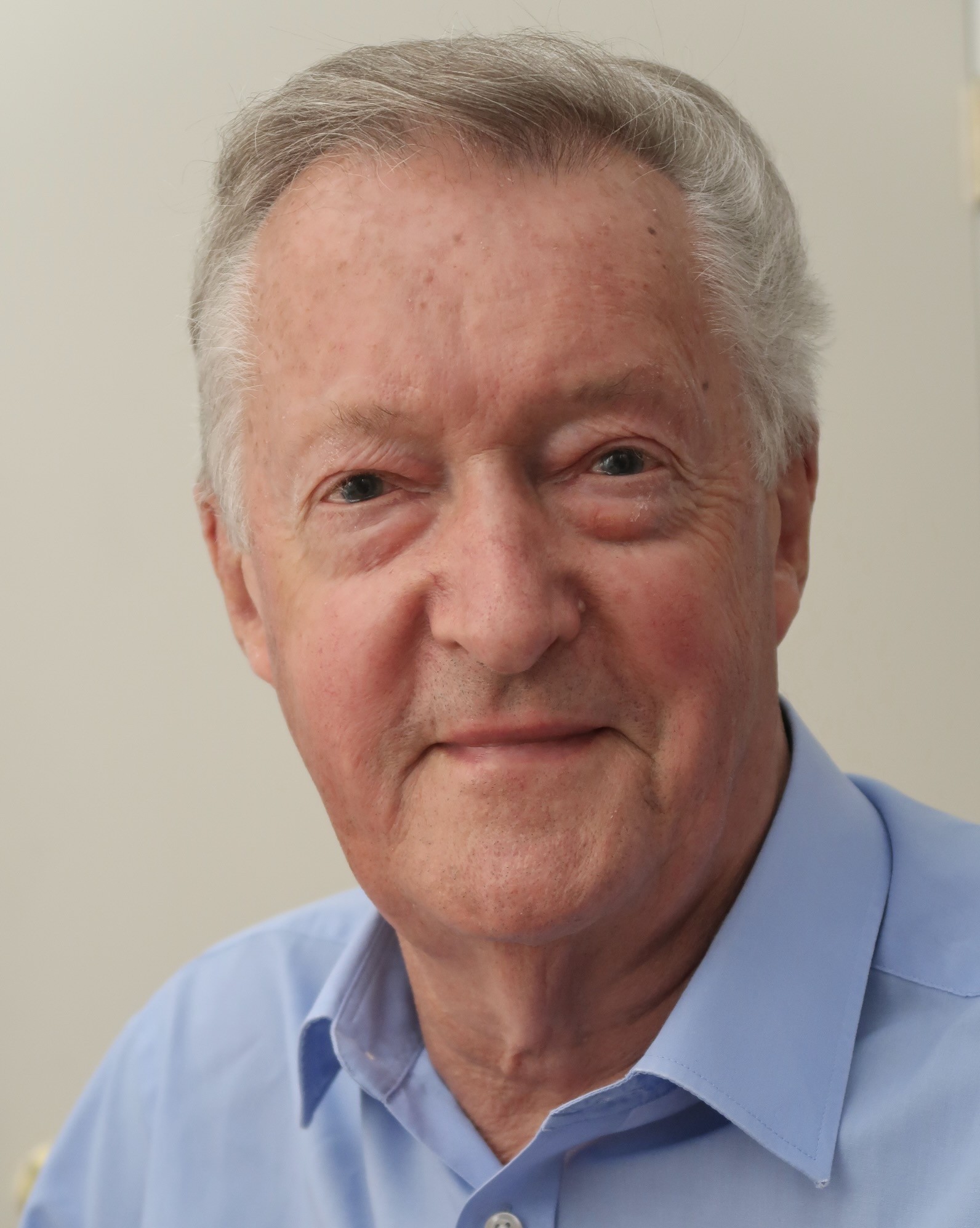
Sir John Daniel
Vice-Chancellor of the Open University (1990–2001), Assistant Director-General for Education at UNESCO (2001–2004), and President of the Commonwealth of Learning (2004–2012) — a career spent, across three continents, on the promise of open and distance learning.
When British prime minister Harold Wilson proposed a ‘University of the Air’ in the mid-1960s, the general response was derision. “Even those in his own party thought it was a pretty silly idea,” Sir John Daniel recalls. “Getting a degree by watching the telly — these kind of things. People were pretty skeptical.”
Within a decade, the Open University was thriving, the BBC broadcasting its programmes in prime time. “People would look at this and say, good grief, I can do that maths they’re teaching, so maybe I can get a degree too.” Daniel was told at one point that one in four people in the UK knew someone who was either enrolled in the Open University or knew someone who was, proving just how much of a phenomenon it became. The detail he plainly relishes as an Oxford graduate: “Within a short time, OU came to mean Open University in the general parlance rather than Oxford University.”
This is the story of one of the most ambitious promises ever made in British education: that higher learning could be opened to everyone the system had, until then, ignored — and without prerequisites, at scale and without compromising quality. Following that promise across fifty years is a transnational endeavour because, though it was born in the UK, its impact is evident around the world. It was carried by another Prime Minister, Edward Heath, to Deng Xiaoping’s China, adapted in India and New York State, and reflected in global initiatives by organisations like UNESCO. With each border crossing and adoption by national and global actors, the conviction that underpinned open learning in the UK evolved, sometimes in different directions, and the people it was originally made for were not always beneficiaries. Today, a variation on this promise finds form in the championing of AI with little memory of earlier attempts.
Few people are better placed to trace the trajectory of ‘openness’ in education and learning than Sir John Daniel. He arrived at the Open University in 1972 as a young lecturer on an unpaid internship, ran it as Vice-Chancellor through the 1990s when it counted its students in the hundreds of thousands, and then moved to UNESCO as Assistant Director-General for Education, where he coordinated the global Education for All campaign. When he started, he says, “I exaggerate only slightly when I say you could have held an international conference in a telephone kiosk for people who were doing distance education seriously. And I just then was swept up in a movement which just grew and grew and grew.”
IThe proposition and the risk
The Open University’s founding was shaped by two contentious decisions made by two of its most determined champions, the first of which concerned scale. While the government was in favour of a modest initial trial, Walter Perry, the founding Vice-Chancellor, “understood from the start that scale was vital” and insisted on opening with tens of thousands of students. The resistance, Daniel says, “was partly a worry about doing anything big, but also this whole idea was not well received”. The second big decision was about parity of esteem. Wilson had delegated the project to Jennie Lee, his Arts Minister and, in Daniel’s telling, “she was absolutely determined: this university is going to be as good as any other university, and there’s no compromise on quality”. Much of the later history revolves around what happened to these two commitments.
The mockery, meanwhile, had misunderstood the model. TV broadcasts amounted to “not more than an hour a week or so of the student’s work”; the other ten hours were reading and writing, built around course materials designed to reflect “modern understanding of how people learn” with production standards that made “receiving these study units a real pleasure rather than just boring typewritten text”. Perry, Daniel says, “made no bones about the fact that this was by far the most difficult way to get a degree in Britain at the time, because basically you had to do all the work”. Students never met their examiners and were judged on the quality of their work alone.
Daniel draws from this an observation about how the standing of universities is ordinarily measured: “Historically, the measure of quality for many universities has been how tough it is to get into them, not how tough it is to get out of them. One short way of describing the Open University is to say it’s very easy to get in, but much harder to get out with a degree than it would be in a place like Oxford.”
IIKeeping the promise
Asked what sustained the promise in practice, Daniel’s answers have less to do with technology and more with the culture that grew around it. “I’ve never been in any organisation that carries anything like the same freight of idealism that the Open University did,” he says, with an unconventional example to illustrate the point. “Even the guys who packed the course materials in the warehouses — those guys really realised that if they put the wrong label on a box, some student was screwed for several weeks before they got it corrected. So there was a real sense that we’re serving these people, from the top of the institution to the bottom.”
With hindsight, the use of television for open learning had a shelf life and later systems would face different circumstances to the early days of the Open University. “In the very early days, if you wanted to study OU Sociology 100, you had to tune in on Thursday evening at seven o’clock. So there was a sense that there were thousands of people around the UK, some students, some not, who were watching this stuff.” Students dispersed across the country studied the same content simultaneously, and that simultaneity gave a scattered institution something resembling a national cohort. Its loss, as TV channels and programmes proliferated over the decades, hinted at a fragmentation that would only become more common.
When the next technology arrived, the institution reorientated itself. In the early 1990s it proposed requiring students to use computers, under what was called the Home Computing Policy, and the students’ association resisted on egalitarian grounds. “They made the argument that unless everyone can have it, no one should have it — which is obviously quite an obstacle to any kind of change.” The university responded by giving the student executive computers at home. “What they found was that they could very quickly aggregate student complaints and feed them to us with serious evidence that we had to do something. We were hoist by our own petard.” Two years later the same congress was urging the university to move faster, and Daniel recalls the number of students online rising from about 5,000 in 1995 to around 150,000 by 1998.
IIIOpenness in translation
The promise of openness in learning, as embodied by the Open University, was British in origin but did not remain in the UK. It travelled across borders, mutating in each country when it arrived, as what ‘open’ meant, Daniel observes, “was related to the challenges in their own society”. In Britain, the radical act was the abolition of entry requirements: first come, first served. In the United States, Empire State College in New York opened the curriculum instead, allowing students to design their own courses. India, with “far fewer places in universities than there were people wanting to come in”, retained but relaxed admission criteria. “The definition of openness varied quite widely from one place to another.”
China took the model furthest and altered it most. Edward Heath personally commended the idea to Deng Xiaoping in the early 1970s and the resulting Chinese system reached millions, though through assembled classrooms watching closed-circuit television rather than students studying at home — a departure from the British model. China also jettisoned the original conviction of open universities’ equal standing among established institutions: “China never had the ideal, which was very strong at the Open University, that this university is going to be as good as any university. They were consciously trying to lift the unserved, and they were not in any way pretending to create a new elite university.” The machinery of openness arrived in China intact but the same cannot be said for Jennie Lee’s vow.
By Daniel’s count there are now around fifty institutions calling themselves open universities — “some of those probably not much more than a letterhead” — around the world, with tens of millions of students between them, more than a million at India’s IGNOU alone and the Chinese system having reached 25 million students. What has distinguished the successes from the letterheads, in his account, is the driving force behind an open university’s founding. Institutions “created by people who really had fire in their bellies” thrived, while those created because “the central government said, you will create your own university, because we want every state to have one” did not. “That’s not a good way to create anything.” Later, digitalisation gave governments a fresh reason to take an interest in institutions some had half-forgotten. Places like Korea realised, as Daniel puts it, “wait a minute, we’ve already got a vehicle we can use to get out into the wider population”, and funded their open universities to bring national learning systems online.
It is worth a brief digression here because, while open universities were multiplying, the language of openness was being spoken at a much larger scale, and with very different practical content. Education for All, relaunched in Dakar in 2000 after a first attempt in Jomtien in 1990 “never really went anywhere in the 90s”, promised K-12 education to everyone. Discursively, this was similar to the promise the Open University had made in 1969, extended to the whole world: access for those the existing systems had overlooked. Daniel’s own career followed the promise’s widening arc, arriving at UNESCO as Assistant Director-General for Education in 2001 just after an instructive episode in the politics of global education governance. “The responsibility for implementing the Dakar framework was given to UNESCO, whereas the World Bank was actually expecting it would be given to it. So it started off with a bit of typical international jealousy.”
In practice, however, the global version of the promise had little to do with openness as the OU had understood it, and almost nothing to do with its technology. The campaign concentrated, deliberately, on primary schooling. It was the World Bank, Daniel recalls, who “intelligently said, listen, we can’t take on the whole of K-12 at one shot, so let’s start with primary”. Asked whether technology was central to the discussions, he is direct: “No, I don’t think it was central to discussions at all.” What mattered was of another order entirely. “Putting fences around schools was actually quite important, because it meant that the parents of girls were prepared to send them to school.” Teacher absenteeism — “thousands of teachers never showed up for work; they got jobs by influence and patronage, often miles from where they lived” — meant that in many countries “the organisation of the system was a total disaster. So it was a case of getting organised, putting some money into materials. Very simple, straightforward things.”
The juxtaposition is enlightening in terms of how educational promises are discursively formed. The same words — open, access, for all — infused two very different projects. In the open university world, they meant leveraging technology to provide a route into higher education for adults; in the international campaign, they denoted fences, effective aid disbursement and primary school places for children. Indeed, money, rather than rhetoric, made the international campaign relatively successful. The Millennium Declaration gave the Dakar framework resources, and Daniel spent his UNESCO years trying “to corral the World Bank, UNICEF, all the players, all the national development agencies to contribute”. Cooperation among agencies “is not a given by any means — the Bank considers itself superior to everyone”, but a new World Bank education head, the Kenyan educator Ruth Kagia, “decided she was going to commit to this and really work alongside us”. For a period, “there was quite a hum behind it and good things were happening”. The Scandinavians punched above their weight, Britain funded the annual monitoring report, the Americans “never really joined in any of these things”. By the 2015 target date, in Daniel’s summary, “most countries had got at least ninety per cent of their primary kids into school”. Of the successor framework he is blunt, having been “in at the very beginning of the definition” of the Sustainable Development Goals. “Unlike the Millennium Declaration, which had some money behind it, there’s been very little money behind the Sustainable Development Goals — so a lot of the stuff in higher and other education there is basically whistling in the wind.”
IVMutations
The 2000s produced two further versions of openness. In 2002, UNESCO convened the meeting that coined the term “open educational resources”, building on MIT’s decision to place its course notes in the public domain. Progress was “slow, because it was a very scary concept for commercial publishers, and they fought it every inch of the way”, until governments discovered the savings on textbooks, with British Columbia playing an outsized role and the Hewlett Foundation funding the movement into maturity. The second was the MOOC. Daniel comments from first-hand experience; he has taken twenty MOOCs himself (“I didn’t finish all of them because I got bored, but many I did finish”). His assessment is both generous and pointed: “The people who do them are self-chosen, and probably pretty bright and pretty qualified. There was a study done that most people studying MOOCs already had a degree. So it was a kind of more to those with most.”
This is a far cry from the founding ideals of the Open University. The institution was engineered to reach “people without the usual school qualifications” and, Daniel says, “that has tended to be lost in most attempts to imitate it”. He describes the general mechanism in terms that apply not just to MOOCs but many forms of modern, digital learning. “As people have picked this up, they’ve usually tended to offer more bells and whistles on their existing offer to their existing students, rather than to try and reach a new clientele.” The pandemic demonstrated this tendency worldwide. Universities “did a remarkable job of adapting”, but “when you had to change overnight to offering your courses on Zoom, you basically offered it to the students you already had. You weren’t trying to spread your wings into the wider community. And I think that’s still the case to this day.”
What MOOCs changed permanently, Daniel notes, was the unit of learning: they “made it credible to offer much shorter snippets of courses”, opening the way to micro-credentials and to “a whole industry where people who do not have official credentialing power get in and, by their own credibility, back micro-credentials. It’s very much a buyer-beware kind of business, but nevertheless a useful addition to the ecosystem.”
VThe record
Fifty years on, legacies can be discerned. For one, the higher education system was permanently loosened: “You didn’t have to apologise for doing something which was new and a bit odd.” Flexible, part-time, distance and online study moved from a national joke in the UK to ordinary infrastructure across much of the world, and the case for scale no longer needs making. Another long-term influence of openness cut straight through the conventional universities themselves. To staff its optional tutorial meetings — held all over the UK and beyond, usually in the evenings in local schools — the OU recruited a large corps of part-time tutors to convene them: close to 10,000 by the 1990s, the majority of them full-time faculty at other universities. Many arrived as young academics wanting a little extra income and stayed for decades, Daniel recalls, both because they enjoyed the enthusiasm of OU students and because the OU trained them in teaching and tutoring in ways their home institutions did not. Their brief was to carry students through the course as designed, not to lecture on their own idea of what it should cover, so each received the full set of OU course materials, which went home with them, shaping what and how they taught the same subjects on their own campuses.
Other parts of the promise fared less well. Parity of esteem eroded as elite institutions, “as always, doing their best to make a comeback”, have reasserted that quality means “restricting entry”. Nor does Daniel believe the animating idea of openness retains its former force. “There’s a terrific emphasis these days in the press on inequality”, he says, but openness as a live political pressure has faded. “It’s a rhetorical concern to politicians, but you don’t get the impression that there are the same pressures.”
He then offers an observation that explains why revisiting these episodes matters. Institutions forget. “The contemporary UNESCO doesn’t have an institutional memory”, he says. He belongs to a UNESCO retirees group that meets in Paris every other month. “These guys are reliving what was hot in the 60s, 70s, 80s, 90s. It’s very, very interesting — but it doesn’t carry over much into the present day.” He contrasts it with the OU itself, where “nothing ever got forgotten” because the university’s bureaucracy was so professional.
VIThe newest promise
Ask Daniel about AI and he begins with a disclaimer — “I’ve decided I’m not really going to get myself into AI in any big way…” — before offering two remarks that neatly situate it within the historical context of openness. “We’re in an era where the emphasis is more on individual striving than on collective advancement.” The OU aimed at individuals studying at home, yet produced “a great sense of collective achievement”. AI-personalised learning proposes a curriculum of one, at the other end of the spectrum from Sociology 100 at seven o’clock on a Thursday evening. The second remark is a warning: “I think it’s all to try for. I think we’re headed for some fairly major busts on the way. And I think there’s a very great danger that it will increase inequalities rather than the reverse. But who knows?”
The promises in this story that came to something all had something solid behind them. The Open University had Jennie Lee and Walter Perry, warehouses whose packers understood the mission and decades in which to make it reality. Education for All, in the years it worked, had money and people willing to keep development agencies engaged. AI enters education with more money and force than any of these ever had, yet the conversation around it keeps returning to risk: cheating, jobs, bias, a bubble set to burst. The question Daniel highlights in his recollections of life at the Open University — who all of it is ultimately for — drifts to the edge of the conversation. When it does surface, it has the tone of a “rhetorical concern to politicians”. Recent precedents are not encouraging, as both the MOOC movement and the pandemic scramble to move learning online unevenly benefited the students already enrolled in and served by education. It is worth remembering the Open University’s radical commitment to scale and its mission to reach different strata in society.
This conversation is the first in The Reform Cycle, a series tracing the promises we attach to learning — how they are made, kept and broken across time — through conversations with the people who made them.
↗ Share this conversation to LinkedIn