
A Rare Alignment
Ruth Kagia on how Education for All found its money and its moment, why it still left nearly a hundred million children out of school, and what she believes comes next.
Based on a conversation recorded over Zoom on 16 July 2026.
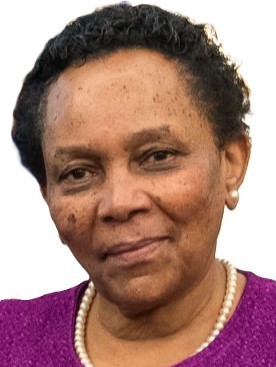
Ruth Kagia
A Kenyan educator who led the World Bank’s global education work from 2002 to 2008, through the Education for All era, following the Dakar conference in 2000 to the Fast Track Initiative that financed its implementation — and later spent eight years as senior adviser and deputy chief of staff in Kenya’s presidency.
Education for All (EFA) was an unambiguous goal: every child would get at least a primary schooling. For the fifteen years either side of 2000, it drew more money and political attention than education in the developing world had ever received. Ruth Kagia ran the World Bank’s global education work throughout most of that period, from the Dakar conference that set the target in 2000 to the Fast Track Initiative built to finance it.
Education for All is a transnational as well as national story, declared at Jomtien, Thailand, in 1990, renewed in Dakar, financing spearheaded by the G8, national development agencies and international organisations and operationalised in classrooms across the global South. What follows is Kagia’s account of how the story unfolded, how it evolved into an implementation vehicle that delivered on significant results and why it fell short of some of its targets and what she thinks it would take to sustain the effort.
IThe movement and the moment
Kagia begins by warning against reading too much into any single summit. “We should never underestimate how long these movements take,” she says. “A conference is either the beginning or the culmination of a process.” Dakar, in 2000, was not a beginning; it was the continuation of something set in motion a decade earlier at Jomtien, and behind Jomtien lay “very difficult years in the 1980s” — structural adjustment, economic downturn, a frustrated search for how to restart growth. Everyone recognised that education was a sine qua non of economic growth. “As people began to closely look at education,” she says, “they realised that the basics needed to be put in place before education could deliver on its promise. Too many kids were out of school, and had no possibility of getting into school.” Jomtien in 1990 named the goal — meeting basic learning needs for all — but, as Sir John Daniel put it in Episode 1 of this series, the framework “never really went anywhere in the 90s”.
What made Dakar different, in Kagia’s telling, was who was in the room. “Heads of State, Ministers of Education, leading education development agencies, and ALL the heads of relevant key UN agencies — UNDP, UNICEF, UNESCO, the World Bank. Participation was both very high level and very broad in scope.” Education was not being discussed only by educators but also by key education “shareholders”, and she dwells on the apparent contrast with today. “Increasingly, the conversations I’ve been seeing lately tend to be preaching to the choir — educators talking to themselves.” Dakar had put education “at the centre of development”, cross-sectoral, financed and politically owned.
It was also, she says, “a moment in history”, a convergence “you could not have orchestrated”. The World Bank had “perhaps the strongest leadership it has ever had” under President James Wolfensohn, and around him a rare alignment of political conviction — Gordon Brown in Britain, Paul Martin in Canada, strong backing from the Netherlands, Norway and Germany. The G8 took Education for All up in earnest at the 2002 summit at Kananaskis, Canada. “There was an alignment that doesn’t happen every day,” she says. And it went both ways. Developing-country leaders were “leading by example”, and she remembers a meeting in Tanzania that gathered “twelve African heads of state who were seen as the renaissance, the emerging leaders”. From the very beginning, she insists, there was one non-negotiable recognition, that “you are not going to deliver on this agenda without strong political leadership at the national level”.
IIWill and muscle
Ask Kagia what actually turned Dakar into results and she resists the obvious answer. “I will not just make it financing,” she says. “It is operationalisation.” A movement had to come first, and movements “by definition tend to be more emotive than practical”. The 1990s-2000s momentum was galvanised by passionate campaigners — she recalls Oxfam’s line that “the world spends three times more on ice cream than development assistance”. But emotion carried only so far. “Dakar was, OK, we agree. What do we do about it?” The real question was not whether there was political will or the needed resources but “how do you translate that into results”.
The vehicle they built was the Fast Track Initiative, forerunner of today’s Global Partnership for Education. Wolfensohn had made a specific financing commitment at Dakar, which took around eighteen months to become machinery, through the World Bank and IMF Development Committee in April 2002 and then the G8 at Kananaskis that June, which “was the real take-off”. The design was deliberately simple, offering catalytic funding to governments “doing the right thing”. It worked partly because recognition was a multiplier. “Countries began to want boasting rights, and political kudos,” she says, and FTI money became “a stamp of approval — you are doing the right thing, therefore you are getting funding”, so the recognition itself became an incentive.
Kagia illustrates what that backing looked like in practice in her own country. When President Mwai Kibaki abolished primary school fees in Kenya in 2003 and the classrooms filled overnight, she accompanied President Wolfensohn to Nairobi aboard his plane to hand over a fifty-million-dollar grant. The logic was that a bold announcement left unfunded “will create political backlash that could destroy the country”, so “we’ve got to support those who are making bold decisions”. Once the cheque arrived “everybody began to put money into it”, and before long Kibaki was received at the White House. The point was to send a signal that leaders who gambled on expanding access to education would be supported.
Kagia had put this to the European Parliament that same year, when a member asked why the EU should pay governments to do their most basic job. “Their will is strong,” she replied, “but their muscles are weak. If we don’t strengthen their muscles to do what they need to do, they are going to become economic refugees” — a warning delivered, she notes, “before migration became a crisis”. She left with “nearly a billion dollars in commitments”. The lesson is one of “a constant intertwining of the political, the economic and the educational. They were never separate agendas — which is not the case any more. We as educators are talking in one little corner, as the world moves past us.”
The demand, in any case, was already there. Across Africa — a priority region for EFA — the appetite for schooling predated any donor framework. “The whole fight for independence in the fifties and sixties was basically to eliminate poverty, ignorance and disease,” Kagia says, and the early manifestos of the Organisation of African Unity put education and skills at their centre. Governments “didn’t need to be convinced. They were already convinced. They just didn’t have the means to deliver it.” Parents “were selling assets to send kids to school”. For Kagia the point is also personal. Without an education, she says, “my existence would have remained subsistence picking coffee on my grandfather’s farm, like ninety per cent of my peers”.
IIIRunning faster to remain still
For all its momentum, the campaign carried a flaw that would surface only later. “There are many things we did not anticipate,” Kagia says, “and that is always the challenge of momentums. People get carried away… there are not enough people asking, what could go wrong?” Some of what went wrong was external — economies that did not grow fast enough to absorb the newly educated, conflict spreading across the continent, and an HIV/AIDS epidemic that was “so decimating”. At the same time, the campaign was inherently limited in terms of what it measured. “It’s much easier for a head of state or education minister to say, look at these full classrooms, we have enrolled X number more girls into school,” she says. “It’s more difficult to demonstrate how well they are learning.” Enrolments, teachers, classrooms and fences could be “touched and felt”, and they made for good politics. Learning could not, and quality, though written into both the Jomtien and Dakar goals, was not as attractive a sell. “We didn’t have a sharp enough instrument for measuring learning outcomes,” she admits. Even under FTI, the reviews scrutinised plans rather than results. Not until the current GPE 2030 strategy did learning outcomes become central. “It took a lot of evidence to admit, we missed this boat.”
The EFA agenda, within the framework of the Millennium Development Goals, had a significant degree of financing and political will behind it, as well as an action-orientated governance structure. The same cannot be said for the Sustainable Development Goals which followed. Kagia watched the character of the whole enterprise shift. “The SDGs moved the EFA agenda from a multisectoral, multilateral approach — where financing and implementation were central — to the UN,” she says. “And the UN is a fantastic convening platform. It is not a very effective implementation platform.” The summits proliferated and the talk grew, but “we began to lose the script… we began to get soft in terms of implementation”, the hard questions giving way to checked boxes. The 2008 financial crisis and the accumulation of the debt burden further constrained funding for education.
On top of these challenges, Africa’s school-age population had, she says, continued to grow exponentially, and where East Asia had grown its systems during a demographic transition and an economic boom, Africa was doing so against the demographic tide. “Africa was running faster every year to remain still.” Since Dakar, “over a hundred million more children were enrolled in school. And yet today we have some ninety-eight million children out of school. It is the fastest expansion of a school system in the history of education — but the number remains static.” The demographics, she says, “were grossly underestimated”. The deeper failure was imaginative, a system “still using nineteenth-century mode of classroom delivery” — where one trained teacher taught twenty children against a reality of 60+ pupils to one untrained teacher — something had to give. Quality suffered. “Should we be harnessing alternative modalities?” she asks.
IVDesigning for a different world
What, then, survives, and what would Kagia carry into the agenda gradually taking shape for after 2030? “Protect what has proved to be true,” she says, “and what has proved to be true is that country leadership is key.” That means backing leaders who are making a good faith effort. Peer pressure will bring others on board. After leaving the Bank she spent eight years working closely with Kenyan President Uhuru Kenyatta, and observed “nothing gets heads of state to move faster than mentioning how a country next door was doing better than them”. But even as she recognises the moral necessity, she is uneasy about the perverse incentives that seem to disproportionately reward leaders who fail to protect education either because they are in conflict or have marginalised large swaths of their population, she says, and reaches for a family analogy. “It is the good kid who gets assigned all the chores, while the difficult one is left alone because they are too much trouble.”
The greater loss may be the cooperative international environment which underpinned EFA. The “shared global prosperity” of the Bretton Woods settlement — the sense that “we sink or swim together as a global community” — has given way to a world where “everybody is looking inward”. Kagia does not know whether this is “a temporary blip or a fundamental shift”, and suspects the truth lies somewhere between, but if national self-interest is the new norm, the task then shifts to helping leaders pull themselves up by their own bootstraps. She heard exactly that at the Education World Forum, where an education minister declared that education is too important to be left to outsiders. Self-reliance can also spur innovation. “Once they stop relying wholly on outward support, they begin to become innovative,” she says, hunting for the modalities and “best buys” that are responsive to their resource reality. The multilateral system, meanwhile, has to adopt a more humble role. The UN, she argues, must recognise it is “one of many”. It “needs to hold hands with philanthropy and the private sector”, and she sees the beginnings of this, citing the 2025 Financing for Development conference in Seville, where the private sector’s role drew an acknowledgement that “ten years ago would have been unheard of”. It is no accident, she adds, that the Global Partnership for Education “has not just survived but thrived”, because it was prescient — it got the basics right, partnership and countries in the lead, and as aid shrinks, harmonising resources around national leadership only matters more.
Where she will not follow the old script is in its scope. The agenda after 2030, she insists, cannot simply re-pledge Education for All. “I cannot look at the education agenda without wondering about what the geopolitical space the kids will operate in as adults,” she says. “We have put all these kids into school,” she says, “but there are no jobs.” Even as we continue to complete the EFA agenda, the approach needs to be more comprehensive and circular: the transition from school to work, taking in technical and vocational training, higher education and employment. It is “not an accident”, she notes, that the World Bank’s president Ajay Banga has made jobs central, since “you cannot have a country with thirty per cent unemployment and expect stability”. Education has to be treated “as a transformative process”, a whole system rather than a subsystem, foundational learning included but never “foundations for foundations’ sake”.
Across Kagia's reflections, it is clear that demand for education has never been the challenge: the will to be educated, in her telling, pre-empted any global intervention. The difficulties are always in ensuring financing, operationalisation, co-operation between agencies and a shared assumption that countries sink or swim together. Education for All came closer to its primary-schooling target than early sceptics expected and fell short on other fronts, yet it achieved so much because of that rare alignment of circumstances, which barely resonates today. Her own conclusion, however, is practical rather than nostalgic. “The world for which we designed the education system no longer exists,” she says. “So we need to design education systems for a different world.”
This conversation is part of The Reform Cycle, a series tracing the promises we attach to learning — how they are made, kept and broken across time — through conversations with the people who made them.
↗ Share this conversation to LinkedIn